Threads
History as descent.
Most of history is presented as a list of dates. Some of it is better read as a chain — a question handed from one mind to the next across centuries and continents. Below, 9 curated walks through the cast, 33 stops in all.
Thread 01 · Number, zero, gravity, relativity, current, radium
The Mathematics Thread
Every line in modern science begins on a cliff in 5th-century India. Walk it forward — through Baghdad, through Cambridge, through Princeton — and watch the language of the universe assemble itself.
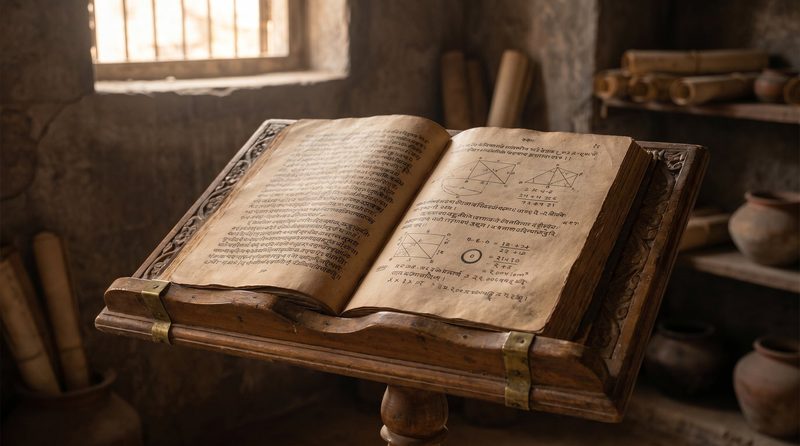
Aryabhata
476–550 CE
Mathematician · Astronomer
Aryabhata writes Earth's rotation, π to four decimals, and zero with its own positional dignity — in 121 verses.
Al-Khwarizmi
c. 780–850 CE
Mathematician · Astronomer · House of Wisdom
Al-Khwarizmi carries those Indian numerals — and zero — west across the desert into Arabic. The Latinisation of his name will become "algorithm."

Ibn Sina (Avicenna)
980–1037 CE
Polymath · Physician · Philosopher
Ibn Sina extends the same translation network into medicine and metaphysics. The Canon of Medicine teaches Europe for six centuries.
Isaac Newton
1643–1727 CE
Scientist
Six hundred years on, Newton inherits the apparatus and writes the Principia. Calculus, optics, gravity — in one Cambridge winter.

Albert Einstein
1879–1955 CE
Physicist
Einstein bends Newton's straight lines. Mass curves space. Time slows when you run.

Nikola Tesla
1856–1943 CE
Inventor · Electrical Engineer
Tesla turns the equations into motors. Niagara lights New York from the water.

Marie Curie
1867–1934 CE
Physicist · Chemist · Two-time Nobel Laureate
And Curie reads what's inside the atom itself — twice, in two sciences. The thread is still being written.
Thread 02 · Saint-Domingue · Maryland · Robben Island
The Long Arc of Liberation
A century and a half between the first chapter and the last. Five lives, three continents, one unfinished sentence.
Toussaint Louverture
1743–1803 CE
Liberator of Haiti
Toussaint leads the only successful slave revolt in modern history. Saint-Domingue becomes Haiti, the first Black republic.
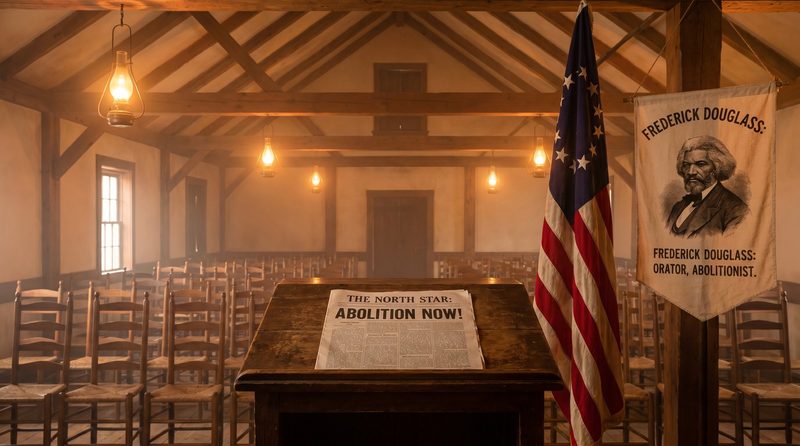
Frederick Douglass
1818–1895 CE
Abolitionist · Orator · Statesman
Douglass teaches himself the alphabet — "the pathway from slavery to freedom" — and becomes Lincoln's most ferocious advisor.
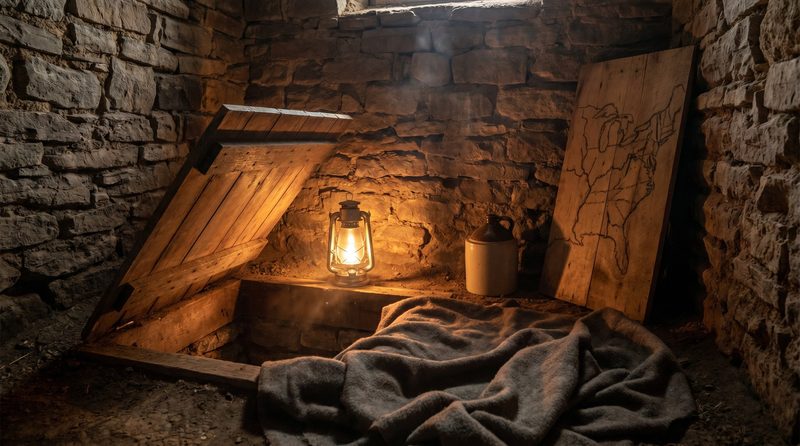
Harriet Tubman
c. 1822–1913 CE
Abolitionist · Conductor of the Underground Railroad
Tubman walks the Underground Railroad thirteen times. Seventy souls freed. She never loses a passenger.
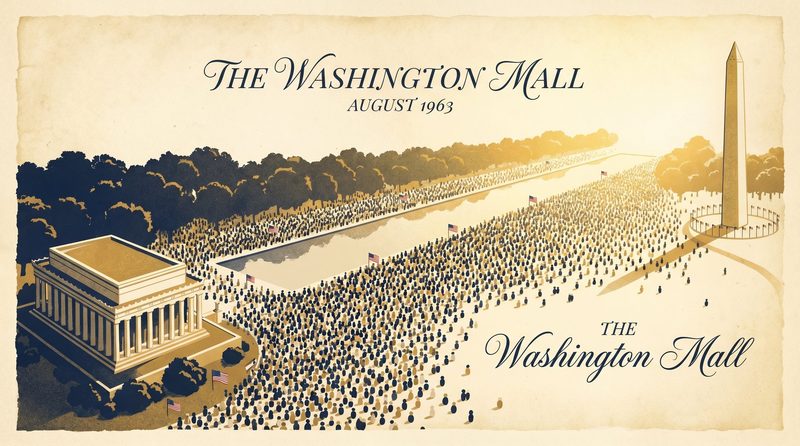
Martin Luther King Jr.
1929–1968 CE
Civil Rights Leader
King carries the work into the 20th century — non-violent, biblical, with the cadence of Douglass behind every sentence.
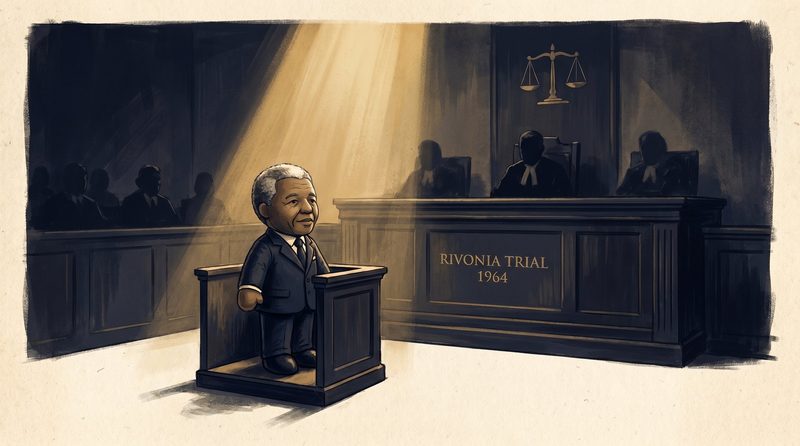
Nelson Mandela
1918–2013 CE
President of South Africa
Mandela walks twenty-seven years in prison and, on the way out, chooses forgiveness over revenge. The chapter is not yet closed.
Thread 03 · Lyric · Dialogue · Tao · Verse
The Word
Four ways of putting language between you and the silence — invented twenty-six centuries apart, still all in use.

Sappho
c. 620–550 BCE
Lyric Poet · The Tenth Muse
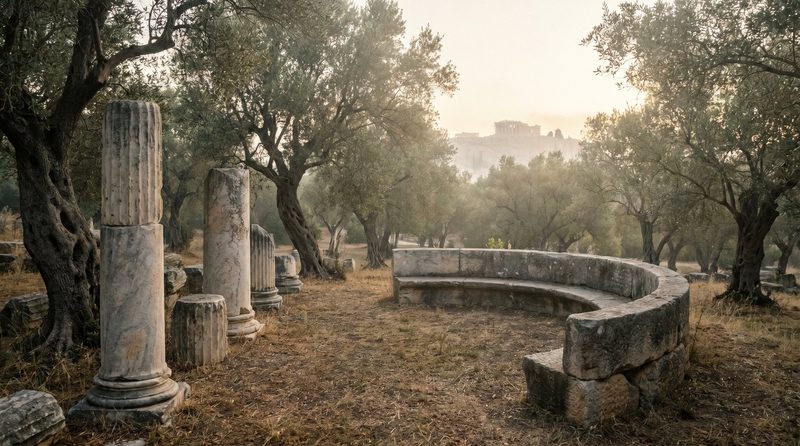
Sappho invents the lyric — one voice, one lyre, one feeling. Plato will call her the tenth Muse.
Plato
428–347 BCE
Philosopher · Founder of the Academy
Plato turns voice into dialogue. The Republic, the Cave, Forms: Western philosophy in conversation with itself.

Lao Tzu
c. 6th century BCE
Philosopher · The Old Master
Lao Tzu condenses everything to five thousand characters and walks west into legend. The book outlives the empire that produced it.

Rumi
1207–1273 CE
Sufi Mystic · Poet · Founder of the Mevlevi Order
Rumi loses Shams of Tabriz — and finds language opening like a wound. The Masnavi is still the bestselling poetry in America.
Thread 04 · Lesbos to Vienna · Twenty-six centuries · Three voices
Music
From a single tortoise-shell lyre on a Greek island to two hundred musicians under a deaf conductor — the same impulse, scaled.
Sappho
c. 620–550 BCE
Lyric Poet · The Tenth Muse
On Lesbos, in c. 620 BCE, a single voice with a single lyre. The lyric poem — and the entire singing tradition that follows — begins here.
Wolfgang Amadeus Mozart
1756–1791 CE
Composer · Classical Era
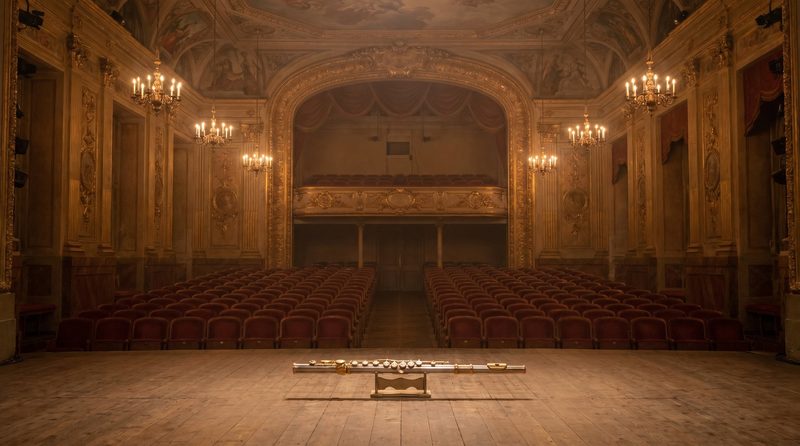
Twenty-three centuries later, Mozart compresses it into thirty-five years and six hundred works. Don Giovanni, Figaro, the Magic Flute.

Ludwig van Beethoven
1770–1827 CE
Composer · The Bridge to Romanticism
Beethoven outgrows Haydn, loses his hearing, and writes the Ninth from inside a silent skull. Twenty thousand mourn him in Vienna.
Thread 05 · Tao · Strategy · Ethics
Three Voices of Ancient China
The three great answers ancient China gave to the same question — how to live in a world at war with itself. Each voice still loud, twenty-five centuries on.
Lao Tzu
c. 6th century BCE
Philosopher · The Old Master
Lao Tzu — the Tao. Soft overcomes hard. The empty bowl is full.

Sun Tzu
c. 544–496 BCE
Strategist · General · Author of the Art of War
Sun Tzu — the Art of War. The supreme excellence is to subdue your enemy without fighting.

Confucius
551–479 BCE
Philosopher · Teacher · Sage of the East
Confucius — the Analects. Treat others as you would be treated. Honour your parents.
Thread 06 · Stone · Fire · Hooves
Three Ways to Unify a Continent
Three rulers, three civilisations, three radically different answers to the same hard question — how do you bind millions of people into one.
Ashoka the Great
c. 304–232 BCE
Mauryan Emperor · The Conqueror Who Wept
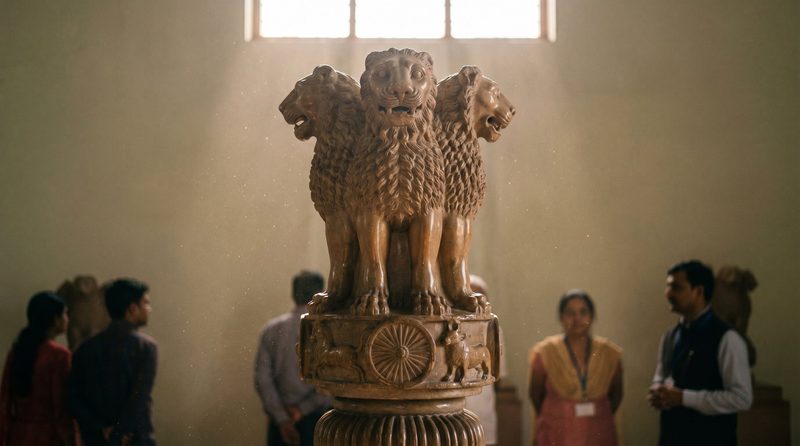
Ashoka — by carving compassion into stone, after walking a battlefield of his own making.

Qin Shi Huang
259–210 BCE
First Emperor of Unified China
Qin Shi Huang — by burning anything that disagreed with him, then building an army of clay to keep watch in the afterlife.

Genghis Khan
1162–1227 CE
Mongol Emperor
Genghis Khan — by ferocity, alliance, and the largest continuous run of horsemen the world has ever assembled.
Thread 07 · Math · Medicine · Mysticism
The Islamic Golden Age
Three Persian-speaking minds across four centuries — math, medicine, mysticism. One civilisation, three ways of taking the world apart.
Al-Khwarizmi
c. 780–850 CE
Mathematician · Astronomer · House of Wisdom
Al-Khwarizmi at the House of Wisdom: algebra, the algorithm, the zero carried west.
Ibn Sina (Avicenna)
980–1037 CE
Polymath · Physician · Philosopher
Ibn Sina at Bukhara and Hamadan: the Canon of Medicine, the Book of Healing — Aristotle bridged into Islam.
Rumi
1207–1273 CE
Sufi Mystic · Poet · Founder of the Mevlevi Order
Rumi at Konya: the Masnavi, the Mevlevi sema. The same civilisation, taken inwards.
Thread 08 · Bodh Gaya · the western mountains · Konya
Mystics
Three traditions, one shared move: away from the city, towards a question, into a kind of language that doesn't quite name what it's pointing at.
Siddhartha Gautama (The Buddha)
c. 563–483 BCE
Religious teacher · Founder of Buddhism
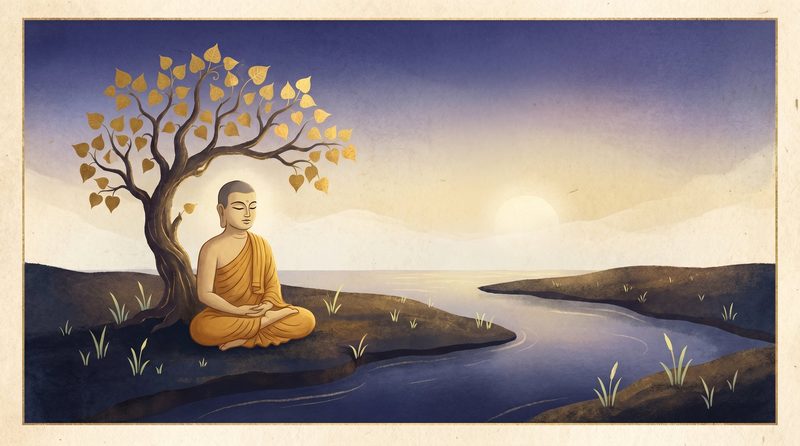
The Buddha leaves his palace, sits beneath a fig tree, and refuses to move until he understands.
Lao Tzu
c. 6th century BCE
Philosopher · The Old Master
Lao Tzu walks west out of the Zhou archives and dictates the Tao Te Ching at the gate before vanishing.
Rumi
1207–1273 CE
Sufi Mystic · Poet · Founder of the Mevlevi Order
Rumi loses Shams in 13th-century Anatolia and turns the grief into the Masnavi. Eight centuries on, the verse still pierces.
Thread 09 · Saqqara · Florence
Two Architects, Five Millennia Apart
Both started something nobody had built before. Both knew exactly what they were doing. Both are buried inside their own buildings.
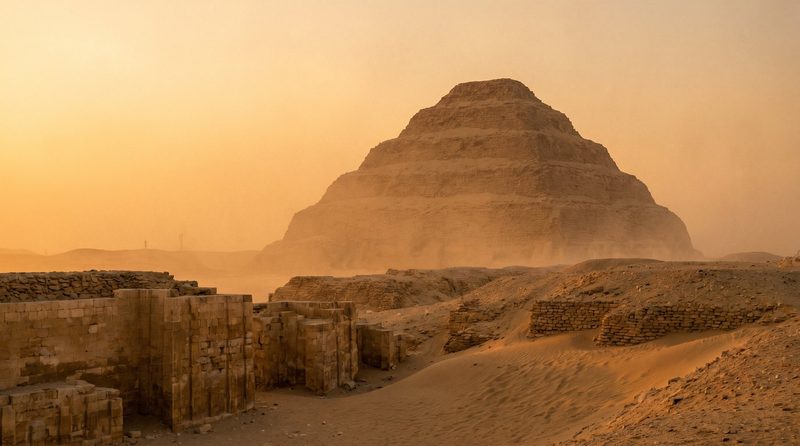
Imhotep
c. 2700 – 2600 BCE
Architect · Vizier · Healer · God of Medicine
Imhotep raises the Step Pyramid at Saqqara — the first monumental stone building in human history.

Filippo Brunelleschi
1377–1446 CE
Architect · Engineer · The Architect of the Renaissance
Brunelleschi closes Florence's impossible vault four thousand years later — and gives the world linear perspective on the side.
"The further backward you look, the further forward you can see."
— Churchill