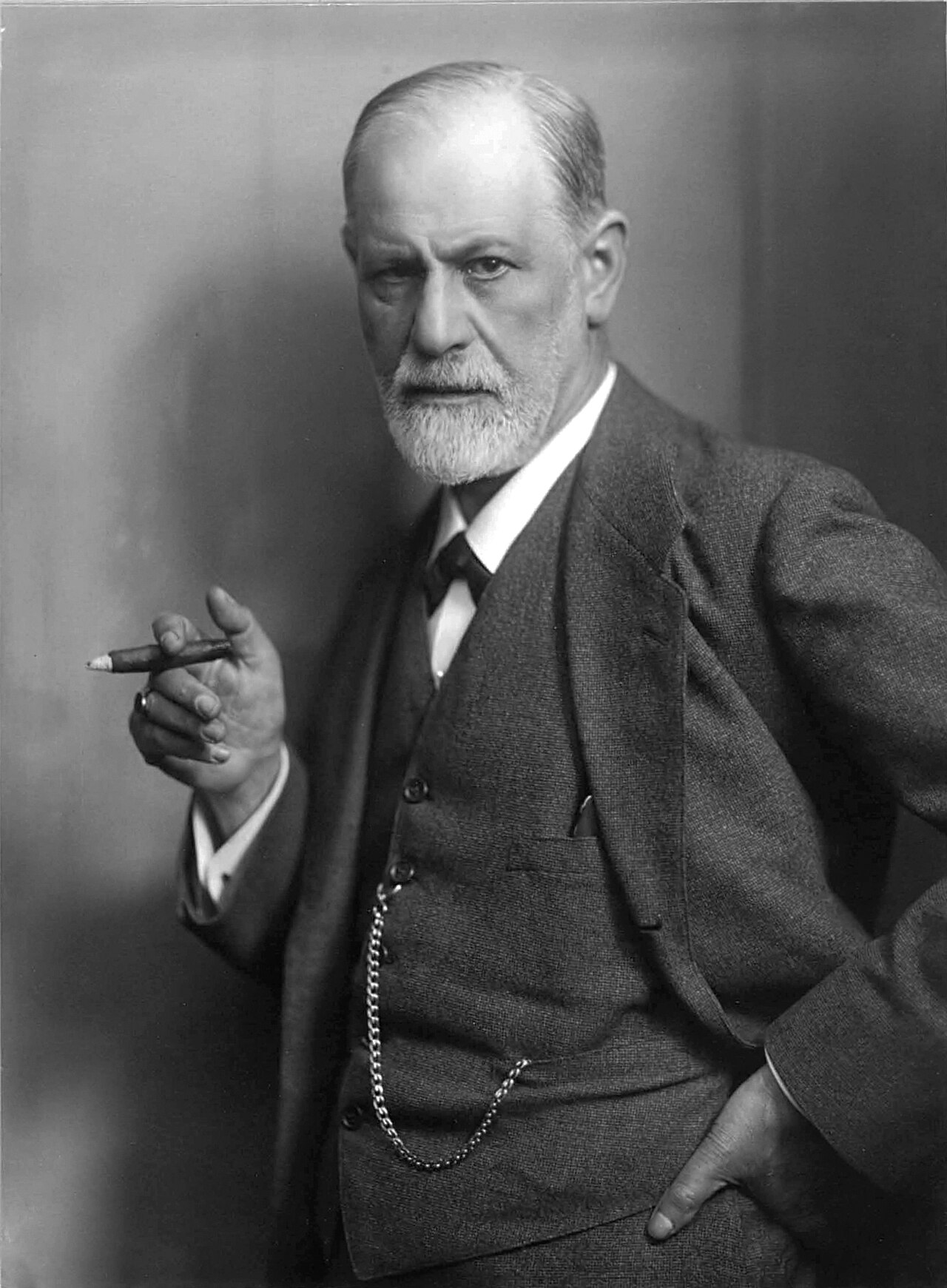
Sigmund Freud was born in Freiberg, Moravia, in 1856, the son of a wool merchant, and trained as a neurologist in Vienna. In the 1890s, working with Josef Breuer on cases of hysteria, he developed what he came to call psychoanalysis: a method based on free association, dream interpretation, and the recovery of repressed memories. The Interpretation of Dreams (1900), Three Essays on the Theory of Sexuality (1905), and Civilization and Its Discontents (1930) introduced concepts — the unconscious, the Oedipus complex, the id-ego-superego — that shaped not only therapy but literature, advertising, art and ordinary self-understanding. Whether the experimental claims hold up is intensely contested today, but the cultural footprint is undeniable. Driven from Vienna by the Anschluss in 1938, he fled to London, where he died of jaw cancer in 1939.
All Figures
Neurologist · Founder of Psychoanalysis
Sigmund Freud
1,856 CE – 1,939 CE
The Viennese neurologist whose talking cure, dream theory, and concept of the unconscious gave the twentieth century a new vocabulary for the inside of a person — and a new way to misuse it.
Lifetime
Date source not yet attached to this catalogue record.